The Tiwanaku Bangle
$70
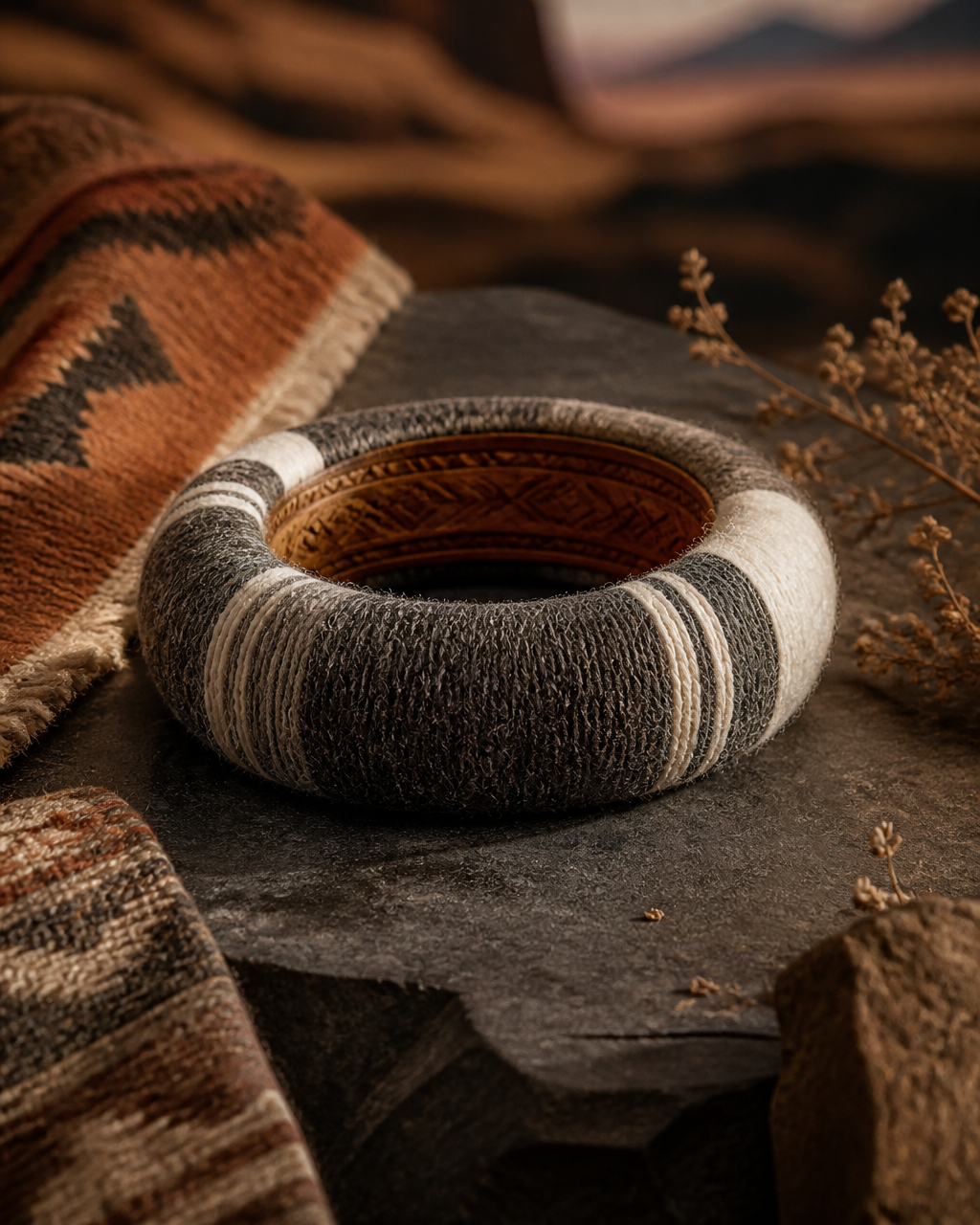
Rounded bangle of hand-spun alpaca wool in charcoal and cream wrapped tightly over a carved wooden ring core.
Materials
Hand-spun alpaca wool (charcoal and cream), wrapped around a wooden ring core
We are currently sourcing similar pieces from this artisan community. Be the first to know.
Why Liz Chose It
“Carmen spun this wool by hand at thirteen thousand feet, naming each alpaca as she went. It's the softest, warmest thing I own, and it carries all that tenderness with it.”
— Elizabeth Groch, Founder
The Story of This Piece
The Tiwanaku Bangle is named for the ancient pre-Columbian civilization that flourished on the shores of Lake Titicaca — a culture that achieved extraordinary artistic and architectural feats long before the rise of the Inca Empire. The Tiwanaku people were masters of textiles, and their legacy lives on in the highland communities that still spin and weave by hand.
This bangle begins with a core of carved wood — lightweight and strong — which is then wrapped in hand-spun alpaca wool. The wool is spun on a traditional drop spindle, producing a yarn that is impossibly soft yet remarkably durable. The charcoal and cream color scheme is achieved naturally — charcoal from the fleece of dark alpacas, cream from white ones — with no dyes used.
The wrapping technique creates a tight, even surface that feels like suede against the skin. Each bangle takes a full day to wrap, and the finished piece is both a bracelet and a tiny sculpture — tactile, warm, and utterly unique.
The Artisan
Carmen Mamani
Age 47 · Tiwanaku region, La Paz, Bolivia
Carmen Mamani is an Aymara spinner and weaver from the Tiwanaku region near Lake Titicaca, one of the highest inhabited areas on Earth. She has been spinning alpaca wool since childhood, learning from her grandmother in a tradition that predates written history.
Carmen's spinning is legendary in her community — she can produce yarn so fine and even that it rivals machine-spun fiber, yet with a warmth and irregularity that machines cannot replicate. She developed the wrapped bangle concept herself, inspired by the way her grandmother would wrap yarn around wooden tools to keep them warm in the frigid highland air.
At 47, Carmen is an elder in her community's weaving cooperative, teaching younger women the art of hand-spinning. She raises her own small herd of alpacas, which she refers to by name and treats with a tenderness that reflects the Aymara belief that animals are spiritual partners, not merely resources.