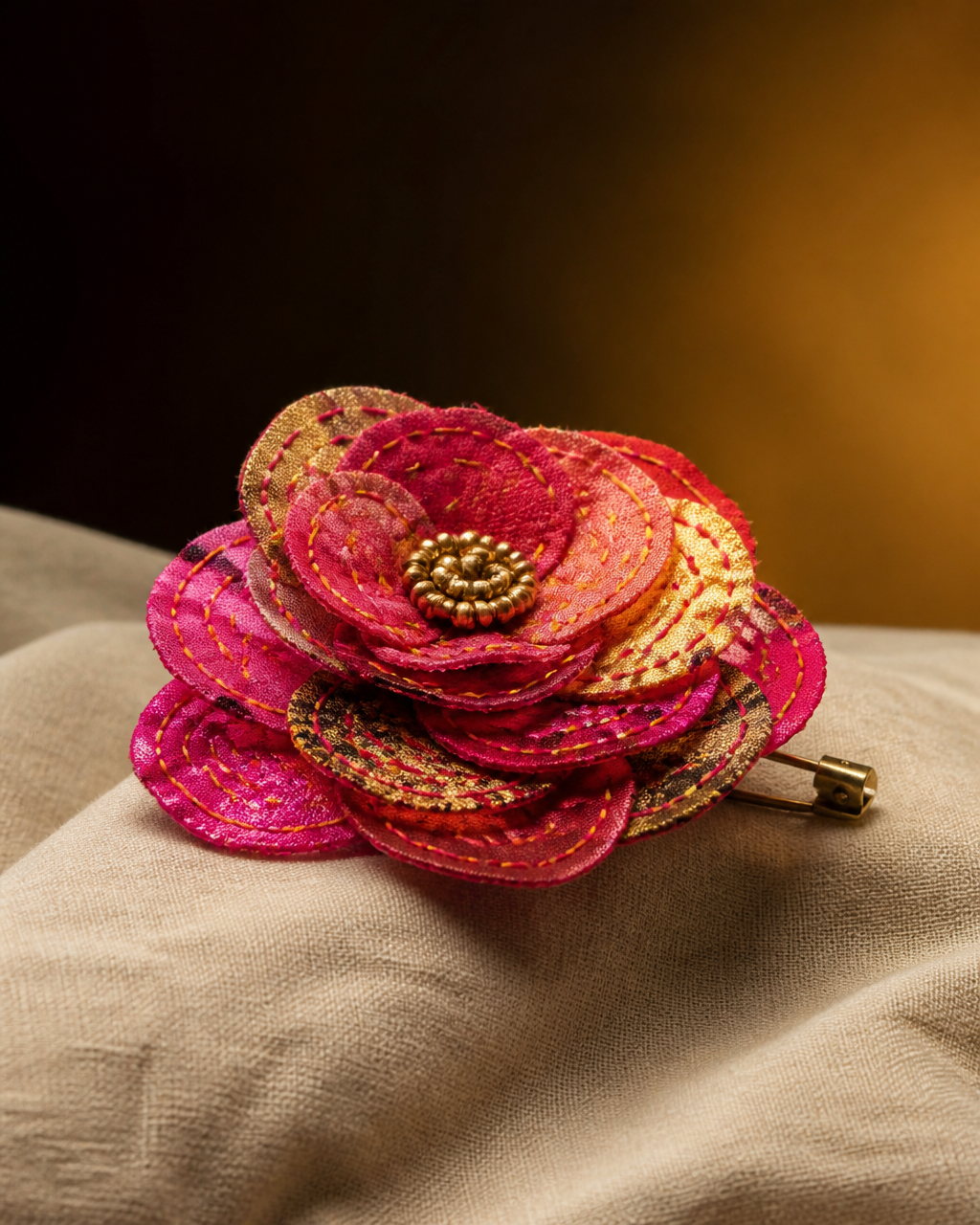
The Dhaka Bloom
$60
Small fabric flower brooch made from Kantha stitch embroidered recycled sari silk in pinks, reds, and golds, with a safety pin back.
Materials
Kantha stitch embroidery on recycled sari silk, small fabric flower form, safety pin back
We are currently sourcing similar pieces from this artisan community. Be the first to know.
Why Liz Chose It
“Ruma stitches discarded saris back into bloom. Every brooch is a piece of someone's history reborn — I pin one on and feel the quiet defiance in it.”
— Elizabeth Groch, Founder
The Story of This Piece
The Dhaka Bloom is a piece that transforms one of Bangladesh's most beloved textile traditions — Kantha embroidery — into a wearable flower. Kantha is the art of running stitch embroidery, traditionally used to create quilts from layers of old sari silk. It is one of the oldest forms of embroidery in South Asia, and it has been practiced almost exclusively by women.
This brooch takes recycled sari silk — fabric that has already lived one life, draped over shoulders, worn to weddings, folded in closets — and gives it a second life as a small sculptural flower. The Kantha stitching that covers the petals serves both decorative and structural purposes, holding the layers of silk together while creating texture and pattern.
The colors — pinks, reds, and golds — are the natural palette of the sari silk, preserved rather than dyed over. Each brooch is slightly different, depending on the particular saris that were used as source material, making every piece a unique artifact of textile history.
The Artisan
Ruma Begum
Age 32 · Dhaka, Bangladesh
Ruma Begum learned Kantha embroidery from her mother in rural Jamalpur, where women gather in groups to stitch quilts during the monsoon season when fieldwork is impossible. The rhythmic, meditative quality of running stitch became a refuge for Ruma during a difficult childhood, and she developed exceptional skill at a young age.
At eighteen, Ruma moved to Dhaka to work in a garment factory — one of the hundreds that produce fast fashion for Western markets. The experience was transformative in the worst way: long hours, low pay, unsafe conditions. After two years, she left the factory and began experimenting with creating small Kantha-embroidered items she could sell independently.
The fabric flower brooch became her signature piece — affordable, distinctive, and deeply personal. Each one uses fabric from discarded saris, many of which she sources from secondhand markets where used clothing arrives in bales from around the world. At 32, Ruma runs a small workshop employing six women, all of them former garment factory workers. She sees her work as an alternative model — proof that beautiful things can be made ethically, slowly, and with dignity.